Alignment Kits
Alignment kits correct the suspension geometry problems that lowering springs, coilovers and tired factory bushings leave behind. Once a car sits lower than stock, the factory arms and adjusters often run out of range, and camber and toe end up outside spec. This range sits within our Suspension category and covers camber kits, toe kits, roll centre adjusters, camber and toe bolts, and eccentric lockout kits from Hardrace, SPL Parts and SPC Performance.
Shop by Product Type
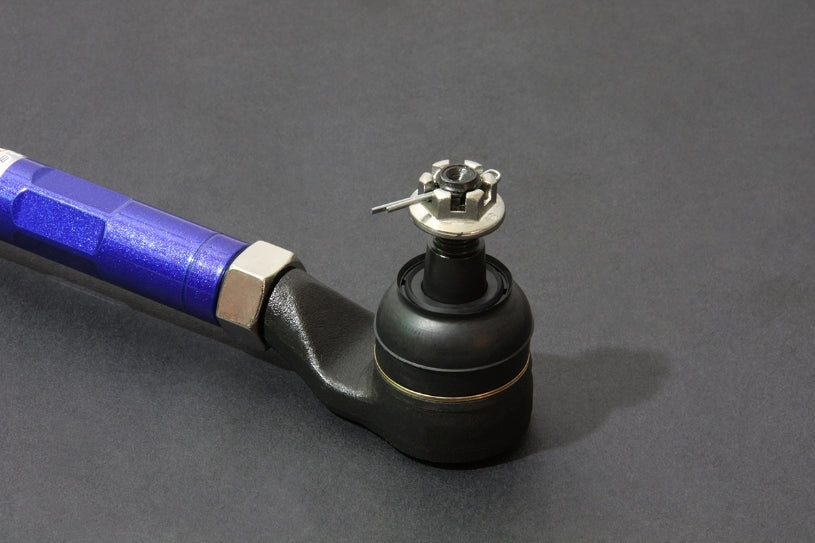
- Camber Arms: pull camber back into range after lowering.
- Toe Arms: precise rear toe correction and stability under power.
- Control Arms: full arm replacement with adjustment built in.
- Camber Plates: top mount camber and caster adjustment for coilover cars.
- Caster Rods: adjustable caster at the front.
- Trailing Arms: rear arm replacement for supported chassis.
- Bushings: replacements for worn factory bushings.
Alignment work usually follows a ride height change, so see also Coilovers, Lowering Springs and the full list of brands we carry.
Choosing the Right Part
Alignment parts are chassis-specific, because arm length, pickup points and bushing sizes all change between platforms. Start with your exact chassis code. Examples in this range include:
- Honda Civic Type R (FK8/FL5) and Accord Euro (CL7/CL9)
- Nissan 350Z (Z33), 370Z (Z34), Silvia/180SX (S13), Silvia/200SX (S14), Skyline (R32/R33/R34 and V37) and GT-R (R35)
- Mazda MX-5 (NC and ND)
- Toyota GR Supra (A90) and BMW Z4 (G29)
- BMW 1 Series (E8X), 3 Series (E9X), 2 Series (F2X), 3/4 Series (F3X) and M2/M3/M4 (F8X)
- Mitsubishi Lancer Evolution X
- Hyundai Veloster N (JS) and i30 Sedan N (CN7)
- Porsche 911 (996/997) and Lotus Elise/Exige (Series 2)
After the chassis code, check these details:
- Drivetrain: AWD and FWD versions of the same model can use different arms.
- Option packs: some Nissan Z33 and Z34 parts depend on whether the car has Rear Active Steer (RAS), so check the listing.
- Front suspension type: front MacPherson strut cars generally rely on camber plates or adjustable lower arms for front camber.
- Rear suspension type: rear multi-link cars usually need camber and toe arms at the back.
- Market: Australian-delivered cars occasionally differ from other markets, so confirm the chassis code and build year against the product listing before ordering.
Choose the part type based on the job:
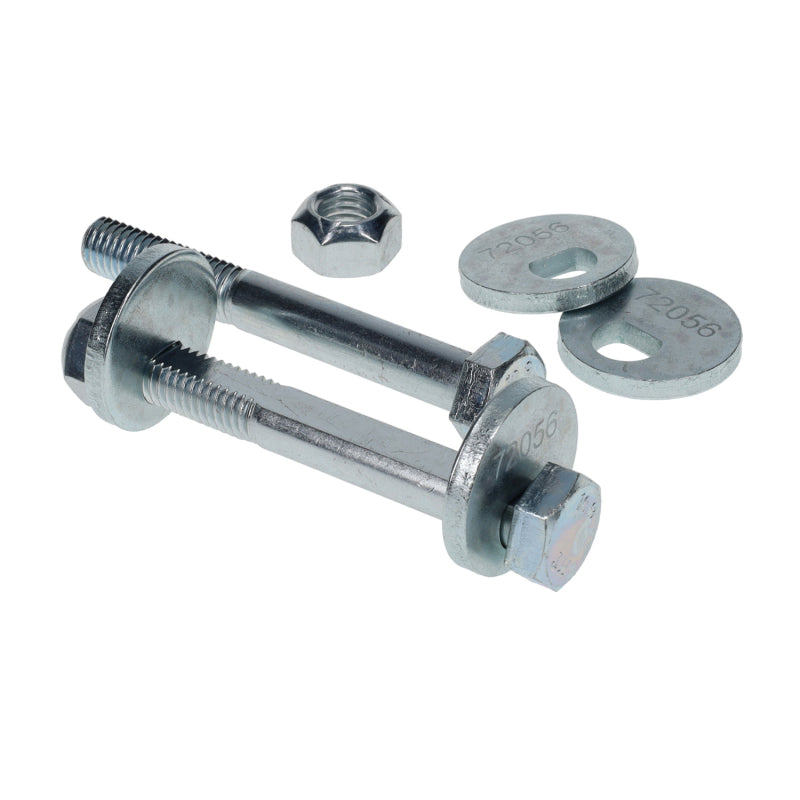
- Eccentric lockout kits replace the factory eccentric adjusters to help alignment settings stay where they were set.
- Camber and toe bolts add adjustment at the existing mounting points.
- Roll centre adjusters help restore front geometry on lowered cars.
There is also a trade-off between bearing and bushing types. Spherical-bearing arms give the sharpest response and the widest adjustment, but they transmit more road noise than rubber or polyurethane-bushed arms. Owners chasing a quiet daily car often prefer bushed arms, while track-focused cars usually justify the spherical option.
Installation & What You'll Need
Installation by a professional is recommended. Most installs need a hoist and standard suspension tools. Seized factory bolts on older cars often need penetrating fluid or heat.
The car needs a full wheel alignment after installation to set camber, caster and toe. Installers commonly recommend re-torquing the hardware after a few hundred kilometres and re-checking the alignment if ride height is changed later.
FAQ
Do I need an alignment kit if the car is only mildly lowered?
A mild lowering spring sometimes stays inside the factory adjustment range. Most lowered cars still benefit from camber correction, particularly at the rear, to protect tyre life.
Will a kit fit my exact model and year?
Fitment varies by chassis code and sometimes drivetrain or option pack. Check the individual product listing, or email us your chassis code and we will confirm before you order.
Do I still need a wheel alignment after fitting one?
Yes. The kit only provides the adjustment. A professional wheel alignment is what actually sets camber, caster and toe to the numbers you want.
What is the difference between a camber arm and a control arm?
A camber arm usually replaces a single factory link to add adjustment. A control arm replaces the larger arm assembly, often with adjustment and upgraded bushings or bearings built in.
Need help choosing? Contact our team at sales@chicaneaustralia.com.au.