

Cat-Back vs Turbo-Back — What's the Difference?
These are the two most common exhaust upgrades for the Subaru WRX and STI, and they get confused constantly. They're not the same modification, they don't deliver the same results, and they don't cost the same. Understanding the difference will save you money, prevent you from buying the wrong system, and make sure you get the outcome you're actually looking for.
What Is a Cat-Back Exhaust?
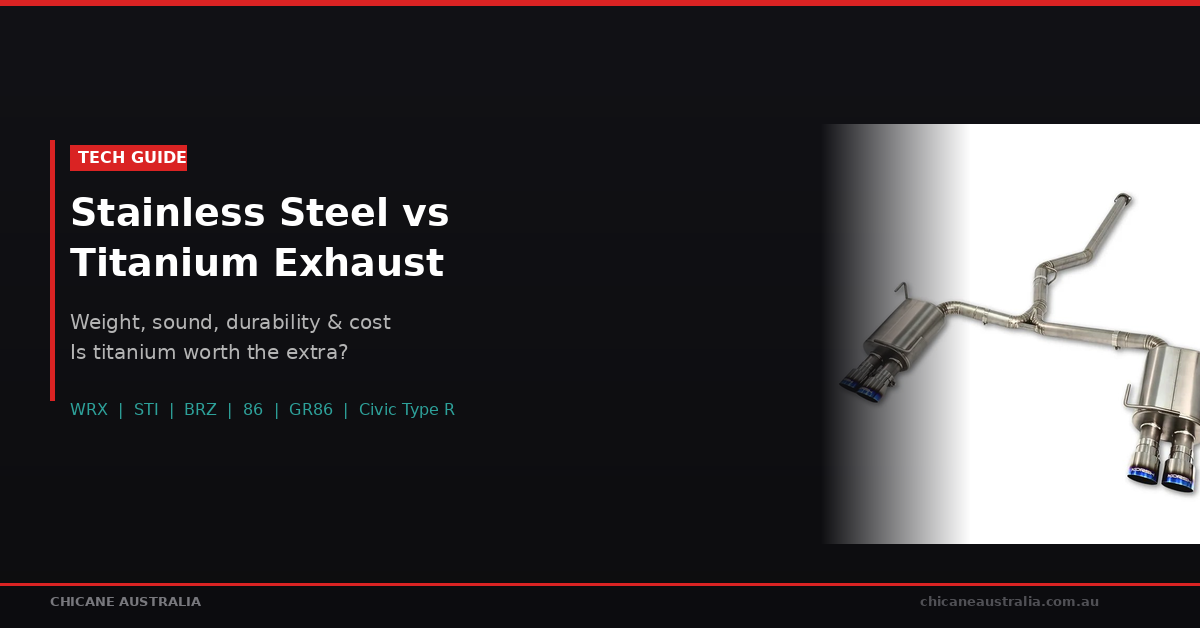
A cat-back exhaust replaces everything behind the catalytic converter — the mid-pipe, resonator (if equipped), rear muffler, and exhaust tips. The factory downpipe and catalytic converter stay in place. The name literally means "from the cat, back."
This is the exhaust upgrade most people start with because it delivers the biggest change in sound for the least money and complexity. A cat-back does not require an ECU tune on a stock turbo car — the factory ECU can adapt to the slightly reduced backpressure without any issues.
KORSH cat-back systems for WRX and STI are available in stainless steel and titanium:
WRX VB (2022+): Stainless — $1,799 · Titanium — $2,599
WRX/STI GV/VA: Stainless — $1,799 · Titanium — $2,599
BRZ / 86 / GR86: Cat-back — $1,699
What Is a Turbo-Back Exhaust?
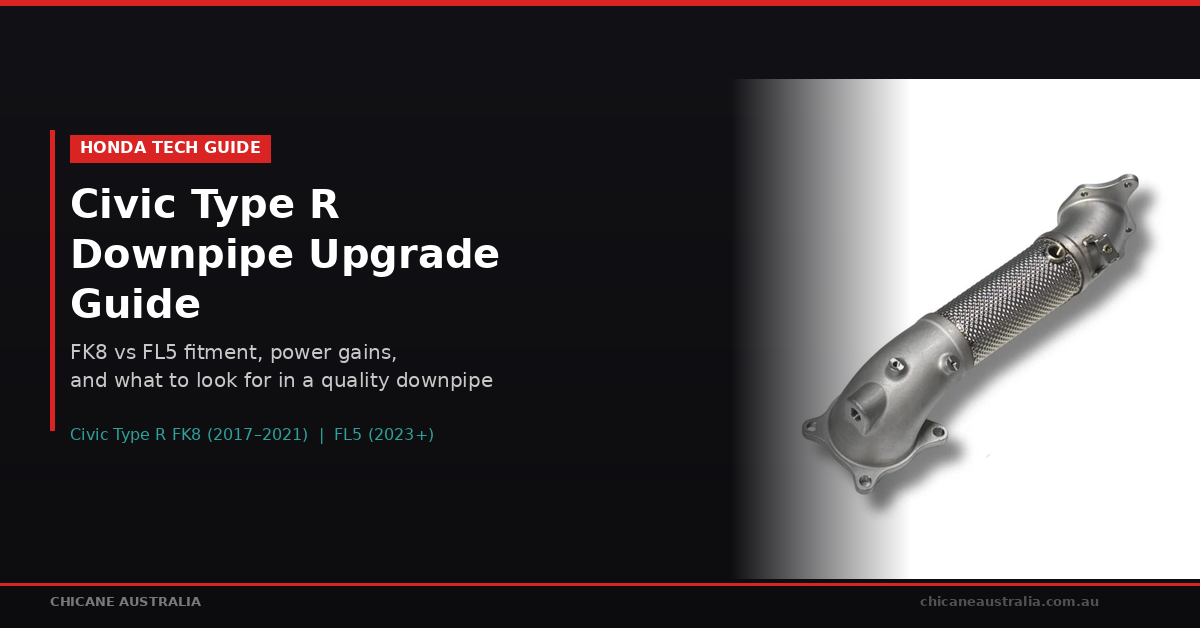
A turbo-back exhaust replaces everything from the turbo outlet to the exhaust tips — the downpipe, catalytic converter (or deletes it), mid-pipe, rear muffler, and tips. It's the entire exhaust system in one kit.
The critical difference is the downpipe. The factory downpipe is the most restrictive component in the entire exhaust system. By replacing it along with the cat-back section, a turbo-back system removes every restriction in the exhaust path simultaneously. This is why it delivers significantly more power than a cat-back alone.
A turbo-back always requires an ECU tune. The change in exhaust flow from replacing the downpipe is significant enough that the factory map cannot compensate safely.
KORSH turbo-back systems:
WRX GH/GR / STI GR (hatch): Stainless — $2,899
WRX GV / STI GV/VA: Stainless — $2,899 · Titanium — $3,799
WRX VA: Stainless — $2,899 · Titanium — $3,799
Power Gains — The Real Numbers
This is what most people want to know, so let's be straightforward about it.
Cat-back exhaust: Expect 5–15whp on a stock turbo WRX/STI. The gains are modest because the factory cat-back section is not particularly restrictive. The real benefit is sound and weight savings (especially titanium). A cat-back alone will not transform the performance of the car — it will make it sound better and feel slightly more responsive.
Turbo-back exhaust: Expect 25–40whp on a stock turbo WRX/STI with a proper tune. The majority of these gains come from the downpipe — removing the factory catalytic converter restriction and opening up the turbo outlet is where the power lives. The cat-back portion of the turbo-back system adds the remaining gains on top.
To put it simply: the downpipe is responsible for roughly 60–70% of the total exhaust power gains. A turbo-back gives you everything. A cat-back gives you the sound but leaves the biggest restriction in place.
Cost Comparison
A turbo-back costs more upfront, but the total cost picture is more nuanced than just the exhaust price.
Cat-back route:
• Cat-back exhaust: ~$1,800–$2,600
- ECU tune: not required
- Total: ~$1,800–$2,600
Turbo-back route:
• Turbo-back exhaust: ~$2,900–$3,800
- Professional ECU tune: ~$500–$800
- Total: ~$3,400–$4,600
Cat-back now, downpipe later:
• Cat-back exhaust: ~$1,800–$2,600
- Downpipe added later: ~$650–$1,100
- ECU tune (required once downpipe is fitted): ~$500–$800
- Total: ~$2,950–$4,500
Notice that buying a cat-back now and adding a downpipe later costs almost the same as buying a turbo-back upfront — sometimes more. If you know you want the full system eventually, buying the turbo-back from the start saves money and means you only need one tune instead of two.
If budget is the main constraint and you're not sure you'll go further, start with the cat-back. If you're planning a proper build, the turbo-back is the smarter investment.
Sound
Both systems change the sound significantly, but differently.
Cat-back: Louder and deeper than stock with a noticeable improvement in exhaust note under load. At idle, the change is moderate — noticeably different from stock but not obnoxious. The sound character depends on the material — stainless is deeper, titanium is sharper. A cat-back is the right choice if you want the car to sound good without being excessively loud for daily driving.
Turbo-back: Louder again, with more volume under boost and on overrun. The additional volume comes from removing the factory catalytic converter (or replacing it with a high-flow cat). A catted turbo-back is louder than a cat-back but still reasonable for daily use. A catless turbo-back is significantly louder and has a rawer, more aggressive tone — better suited to track cars.
Do I Need a Tune?
Cat-back: No. The factory ECU can handle the slightly reduced backpressure from a cat-back exhaust. No check engine lights, no fuelling issues. Bolt it on and drive.
Turbo-back: Yes, always. Replacing the downpipe changes the exhaust flow enough to affect air-fuel ratios and boost control. Running a turbo-back on the factory map will trigger check engine lights at minimum, and at worst can cause lean conditions that risk engine damage. Budget for a professional dyno tune.
Supporting Modifications
Cat-back only — nothing else required. Pair it with quality brake pads (DIXCEL) if you want a well-rounded daily upgrade, but the cat-back works perfectly on an otherwise stock car.
Turbo-back — plan for these:
• ECU tune — mandatory, as above
- Larger injectors — recommended for E85 builds or if you're pushing the stock turbo hard. Injector Dynamics ID1050x for pump fuel, ID1300x for E85
- Uprated fuel pump — the factory pump runs out of capacity as you approach the stock turbo's limits
- Uprated clutch — if you're on a manual, the extra torque from a turbo-back + tune may exceed the factory clutch capacity
If you're combining a turbo-back with a Blouch turbo upgrade, you'll also want a Radium fuel pressure regulator and surge tank for E85 builds, plus a front-mount intercooler. Read our Blouch turbo comparison guide for the full supporting modification list.
Which One Should You Buy?
Buy a Cat-Back If:
• You want better sound and you're happy with the current power level
- The car is daily-driven and you don't want the cost or complexity of a tune
- Budget is the priority and you're not planning further engine modifications
- You want the easiest, lowest-risk exhaust upgrade available
Buy a Turbo-Back If:
• You want real power gains, not just sound
- You're planning a turbo upgrade or other engine modifications
- You're prepared to budget for a professional tune
- You want to do it once and do it right rather than upgrading in stages
The Staged Approach
If you're not ready for a turbo-back today, start with a cat-back and add a KORSH catted downpipe later when you're ready for the tune. The KORSH cat-back and downpipe are designed to work together — you won't need to replace anything when you add the downpipe. Just be aware that you'll need a tune once the downpipe goes on, and the total cost will be similar to buying the turbo-back from the start.
For a complete engine-to-tip solution, the Cobb/KORSH engine-back package bundles a KORSH UEL header and exhaust with a Cobb Accessport for WRX GV/GR and STI GV/GR/VA — exhaust, headers, and tuning in one kit.
Browse the full range: KORSH Subaru WRX/STI Exhaust Systems · All KORSH Products. For more detail on each exhaust component, read our complete WRX & STI exhaust upgrade guide. For material comparison, see stainless steel vs titanium.
Need help choosing between cat-back and turbo-back for your build? Contact us or email sales@chicaneaustralia.com.au.