
Stainless Steel vs Titanium — Which Exhaust Material Is Right for Your Build?
If you've started shopping for an aftermarket exhaust, you've noticed that most systems come in two options: stainless steel and titanium. The price difference is significant — a titanium system can cost 30–50% more than the equivalent stainless version. So what are you actually paying for, and is it worth it?
This guide breaks down the real-world differences between stainless steel and titanium exhaust systems — weight, sound, durability, heat management, and cost — so you can make the right choice for how you use your car.
Weight
This is the single biggest reason people choose titanium. Titanium is approximately 40–50% lighter than stainless steel at equivalent wall thickness and strength. On a full cat-back exhaust system, that translates to roughly 5–8kg of savings. On a turbo-back system, the savings can reach 10–15kg.
To put that in perspective, 10–15kg is the equivalent of removing your spare tyre and jack. It doesn't sound like much on paper, but it's unsprung and low-mounted weight — the kind of weight that affects how the car changes direction and accelerates. For a daily driver, you probably won't notice the difference in isolation. For a track car or time attack build where you're chasing tenths, every kilogram matters and titanium exhaust is one of the easiest ways to shed weight without sacrificing anything functional.
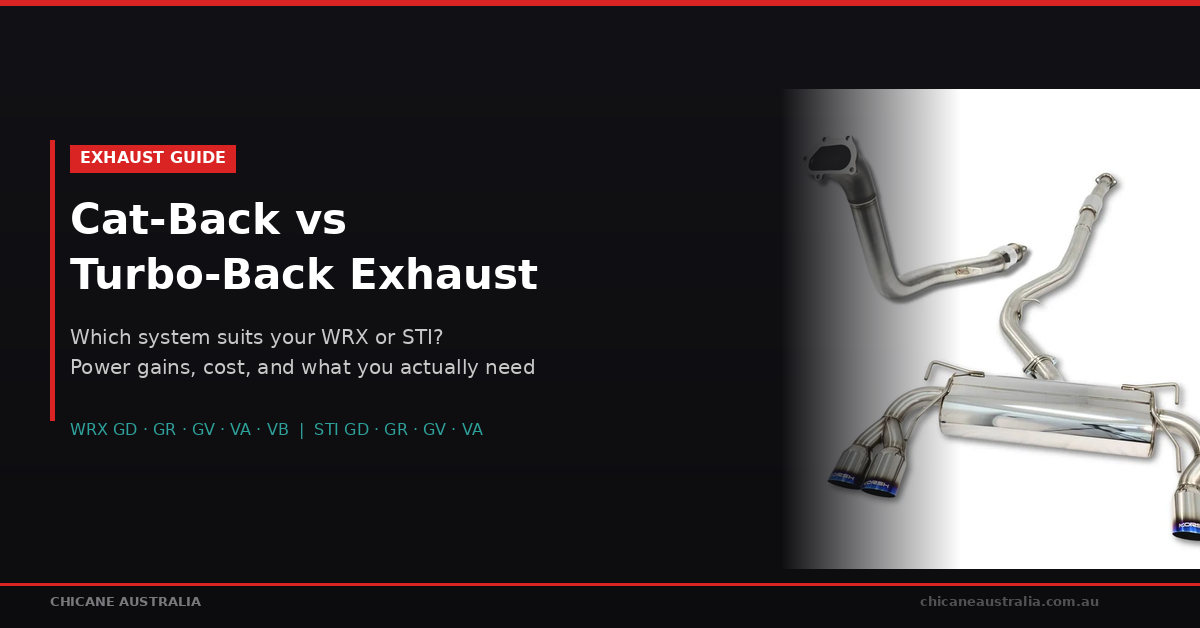
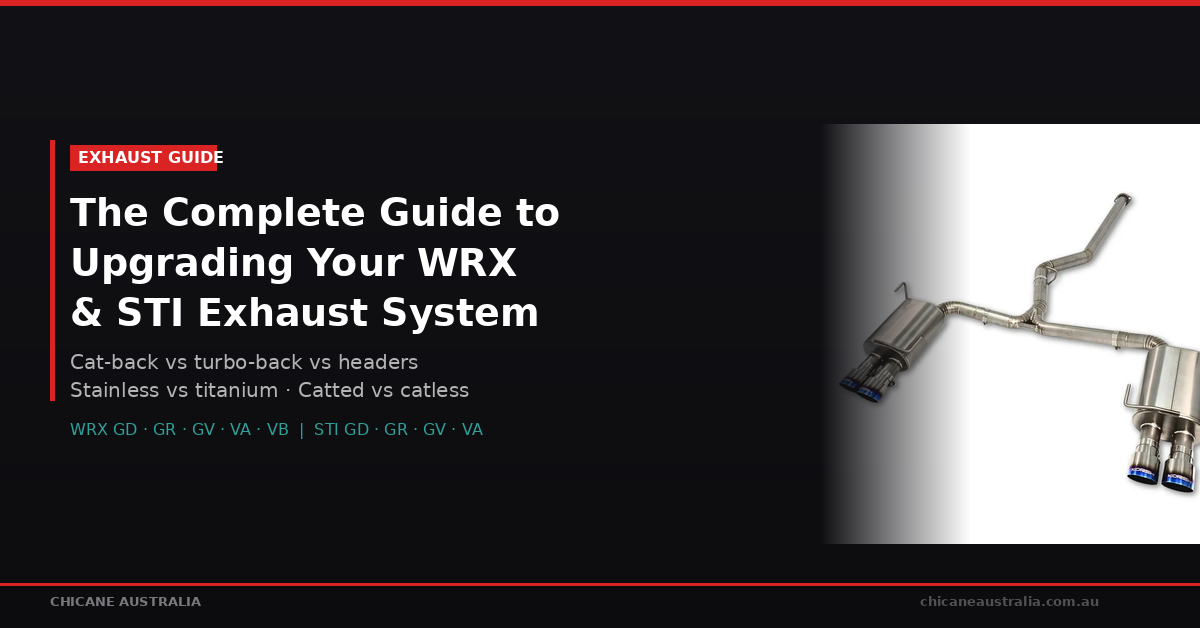
For reference, a KORSH stainless steel cat-back for the WRX/STI GV/VA versus the KORSH titanium cat-back for the same chassis — identical design, identical fitment, significant weight difference.
Sound
Stainless steel and titanium exhaust systems do not sound the same, even when the design is identical. The material itself affects the resonant frequency of the exhaust.
Stainless steel produces a deeper, more resonant exhaust note. It has a heavier, more traditional tone that most people associate with a performance exhaust. The sound is full-bodied and smooth across the rev range.
Titanium produces a sharper, higher-pitched, more metallic tone. It has a distinctive rasp and crackle on overrun that stainless doesn't replicate. Some people describe titanium as sounding more aggressive or more "exotic". On turbocharged cars, the difference is less pronounced under boost (because the turbo muffles the exhaust note anyway) but very noticeable at idle, on part-throttle, and during gear changes.
Neither is objectively better — it comes down to personal preference. If you can, listen to both before buying. If you prefer a deep, smooth tone, stainless is your material. If you want something sharper and more distinctive, titanium is the answer.
Durability & Corrosion Resistance
Stainless steel is extremely durable. A quality stainless exhaust (304 or 321 grade) will resist corrosion, withstand heat cycling, and last the life of the car under normal driving conditions. It's the proven choice — millions of aftermarket stainless exhausts have been fitted worldwide over decades.
Titanium is also highly corrosion-resistant — arguably more so than stainless steel. It doesn't rust and handles salt, moisture, and chemical exposure better than stainless. However, titanium is more brittle than stainless steel at lower temperatures and can crack if subjected to impact or improper mounting. Titanium welds also require more skill and care — a poorly welded titanium exhaust will fail faster than a poorly welded stainless one. This is why buying from a manufacturer with proven titanium fabrication experience matters.
In practical terms, both materials will last for years with no issues. Titanium has a slight edge in corrosion resistance, stainless has a slight edge in impact tolerance. For Australian conditions — where salt air on coastal roads is a factor but potholes and speed bumps are the bigger threat — both are excellent choices.
Heat Management
Titanium has lower thermal conductivity than stainless steel, meaning it retains heat within the exhaust gases rather than radiating it into the engine bay. This has two practical effects:
Exhaust gas velocity: Hotter exhaust gases move faster. By keeping the heat in the gas rather than losing it through the pipe walls, a titanium exhaust maintains slightly higher exhaust gas velocity. On a turbocharged car, this can contribute to marginally faster turbo spool — though the difference is small compared to the effect of pipe diameter and design.
Under-bonnet temperatures: A titanium exhaust radiates less heat into the engine bay. This can be beneficial for components near the exhaust path — intercooler piping, fuel lines, and wiring. On heavily modified cars with tight engine bays, reduced radiant heat is a genuine advantage.
For most street cars, the thermal difference between stainless and titanium is not significant enough to affect performance. For track cars running sustained high-load sessions where heat soak is a real problem, titanium's thermal properties are a measurable benefit.
The Blue/Purple Heat Discolouration
One of the most recognisable features of a titanium exhaust is the blue, purple, and gold heat discolouration that develops on the tips and rear sections after heat cycling. This happens because titanium forms a thin oxide layer when heated, and the thickness of that layer determines the colour.
This is purely cosmetic — it doesn't affect performance or durability. Most enthusiasts consider it a visual feature, not a flaw. If you prefer a clean, polished look, stainless steel maintains its appearance more consistently over time. If you like the heat-coloured look, titanium delivers it naturally without any additional treatment.
Cost
Titanium exhaust systems typically cost 30–50% more than their stainless steel equivalents. The reasons are straightforward: titanium as a raw material costs more, it's harder to source in exhaust-grade sheet and tube, and it requires more specialised fabrication — specifically, TIG welding in an inert gas environment (argon back-purge) to prevent contamination of the welds.
Here's what that looks like in practice with KORSH systems:
WRX VB cat-back: Stainless — $1,799 vs Titanium — $2,599
WRX/STI GV/VA cat-back: Stainless — $1,799 vs Titanium — $2,599
WRX GV / STI GV/VA turbo-back: Stainless — $2,899 vs Titanium — $3,799
WRX VA turbo-back: Stainless — $2,899 vs Titanium — $3,799
The question isn't whether titanium is "better" — it is, objectively, in weight and thermal properties. The question is whether those advantages are worth the price premium for how you use the car.
Which Should You Choose?
Choose Stainless Steel If:
• The car is primarily street-driven
- Budget matters and you'd rather spend the savings on other modifications
- You prefer a deeper, smoother exhaust note
- You want a proven, low-maintenance material
- The weight savings aren't relevant to how you use the car
Choose Titanium If:
• The car sees regular track days or competition use
- You're building a time attack or dedicated track car where weight matters
- You prefer a sharper, more metallic exhaust note
- You want the distinctive heat-coloured tips
- You're already optimising weight across the rest of the build (lightweight wheels, stripped interior, carbon panels)
The Practical Middle Ground
If you're torn, consider this: spend the money on a stainless steel turbo-back and put the savings toward a supporting modification that makes a bigger performance difference — like larger injectors (Injector Dynamics ID1050x), an uprated fuel system (Radium fuel rail and regulator), or better brake pads (DIXCEL) for the track. A stainless turbo-back with a proper tune and supporting mods will outperform a titanium cat-back on a stock turbo every time.
If you've already done the supporting mods and you're optimising the build, then step up to titanium for the weight savings and sound.
Browse the full exhaust range: KORSH Subaru WRX/STI Exhaust Systems · All KORSH Products. For more exhaust information, read our complete WRX & STI exhaust upgrade guide covering cat-back vs turbo-back vs headers, catted vs catless, and what supporting mods you need at each stage.
Need help deciding between stainless and titanium for your build? Contact us or email sales@chicaneaustralia.com.au.